Creative
Artists & galleries
The work must lead; words should step back.
The short answer
An artist or gallery website has to let the work lead and the words step back. It needs large galleries that still load fast, organised by series or medium, a short artist statement, exhibitions and press, and clear routes to buy, commission or join a workshop. Image quality and page speed have to be solved together.
Must-haves, and why
Large, fast galleries modern formats and lazy loading keep the art sharp and the page fast.
Works organised by series, medium or year collectors follow series.
Details on each work: title, medium, size, year, availability buyers need these to decide.
A short artist statement and bio collectors want to know the person behind the work.
Exhibitions, collections and press third-party recognition supports value.
Routes to buy, enquire, commission or join a workshop interest is wasted without a clear next step.
A blog or journal on process it brings search traffic and shows the process.
Price or “price on request”, stated clearly buyers need to know whether to ask.
Shipping, framing and certificate of authenticity details buyers of originals worry about delivery and authenticity.
Image protection without ruining viewing, such as sensible resolution limits it protects the work without spoiling the view.
Authority & trust signals
Pages to build
Common mistakes
- Huge uncompressed images that load slowly.
- Works with no size, medium or year.
- No way to buy or enquire.
- Long text that competes with the work.
- Watermarks across the whole image.
Our take · Aliasgar Barodawala
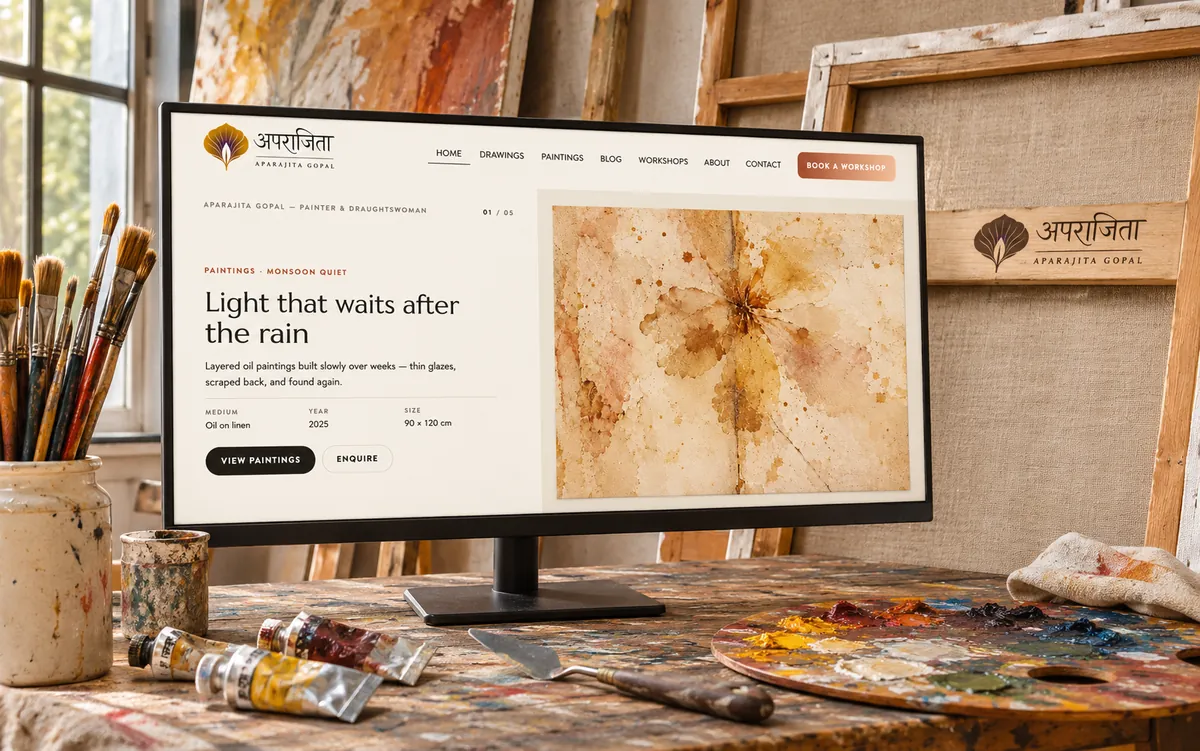
Aparajita Gopal is an artist who needed a site where the paintings speak first. I built it as a minimal gallery on WordPress with a global style kit and Marcellus headings: Drawings, Paintings, Blog, Workshops, About and Contact, with a GSAP hero slider and smooth scrolling. The work leads, the words stay quiet, and every page closes with an invitation to a workshop or a commission.
On FURONG, a resin art and glass furniture brand, buyers browse pieces with quick view and search, then ask for the one they want. On Jashn-e-Fiza, a poetry site, visitors choose a mood and land on poems made for it. Different art forms, same rule: a gallery wall that loads fast.
Brands named here are my own self-initiated concepts unless marked Client work. Paid client work is under NDA.
Galleries load heavy images. Modern formats and lazy loading keep the art sharp and the page fast.
From the work · Aparajita Gopal
- The brief
An artist needed a site where the paintings speak first.
- What we did
A minimal gallery with drawings, paintings, a blog and workshops, using a hero slider and smooth scrolling.
- What it does
Every page closes with an invitation to a workshop or a commission.
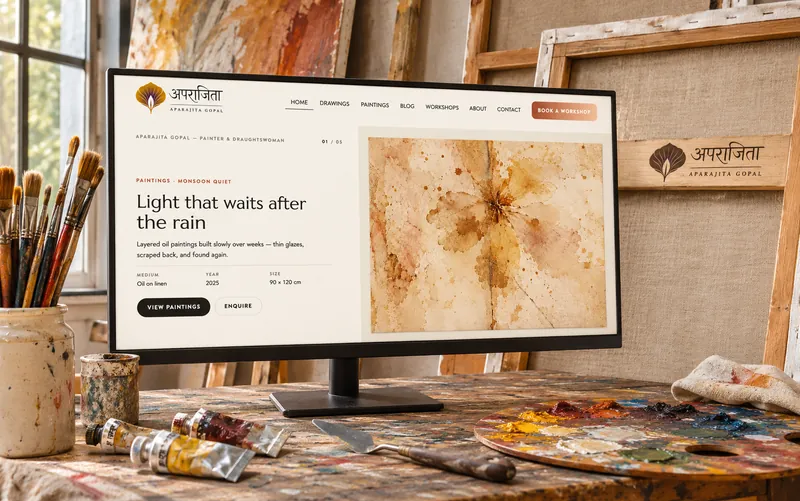 See the project · BrandsAparajita GopalArtist and paintingsA gallery wall that loads in a second. The work leads, the words stay quiet, and every page closes with an invitation to a workshop or a commission.
Search terms worth owning
- #contemporary artist
- #buy paintings online
- #art workshops
- #commission a painting
- #art gallery
- #Indian artist
Questions people ask
What should an artist's website include?
Galleries by series or medium, details for each work, a short statement, exhibitions and press, and clear ways to buy, commission or join a workshop.
How do I keep an art website fast with large images?
Serve images as WebP or AVIF in several sizes, lazy-load everything below the first screen and use a CDN.
Should artists show prices on their website?
Many show prices for available works and say “price on request” for major pieces. Either way, make the next step clear.
How can artists protect their images online?
Publish at a resolution good for screens but not print, add a small signature or subtle mark, and keep a record of originals.
How do artists rank on Google?
Pages for each series and medium, a statement and bio with Person structured data, VisualArtwork markup and a journal on process.
Should an artist sell directly or through galleries?
Both can work together. The website can show availability and direct enquiries to the right gallery or to the artist.
What every work page should show
Collectors read these before anything else.
- Title and year
- Medium and size
- Series
- Availability and price or “on request”
- Enquire or buy
Technical SEO for artists
Art search mixes the artist's name with medium and style.
- Person schema for the artist
- VisualArtwork schema per work
- Image alt text describing the work
- Series and medium pages
- Responsive AVIF or WebP images
Updated 7 Nov 2026 · Aliasgar Barodawala