People & services
Coaches & personal brands
The person is the product. The site should feel like them.
The short answer
A coach's website sells a person and a method. Visitors need to recognise their own problem, see who you are and how you work, and know which offer fits them, then book and pay without a discovery call if they want to. A named method, offers compared side by side and real client stories separate a coach from the crowd.
Must-haves, and why
A named method or signature programme one specific method beats general promises of change.
Offers compared side by side: 1:1, group, course with prices or starting prices.
A quiz that maps a visitor's situation to the right offer it replaces many discovery calls.
Booking with payment and calendar sync a visitor ready to commit can do it in one go.
Credentials, such as ICF certification, and media features visitors check them before trusting a stranger with personal goals.
Client stories with consent and specifics what changed, not just “life-changing”.
A free resource or newsletter for people who aren't ready yet it keeps the not-ready-yet visitor in touch until they are.
Location pages if you coach in person in several cities searches like “life coach in Pune” bring ready clients.
Email, phone and booking one tap away on every page the moment of decision should never need a search.
Authority & trust signals
Pages to build
Common mistakes
- Generic copy about “unlocking potential” that could belong to any coach.
- Every offer hidden behind “book a discovery call”.
- No prices, not even a starting point.
- Testimonials with only a first name and no detail.
- A slow video background on the first screen.
Our take · Aliasgar Barodawala
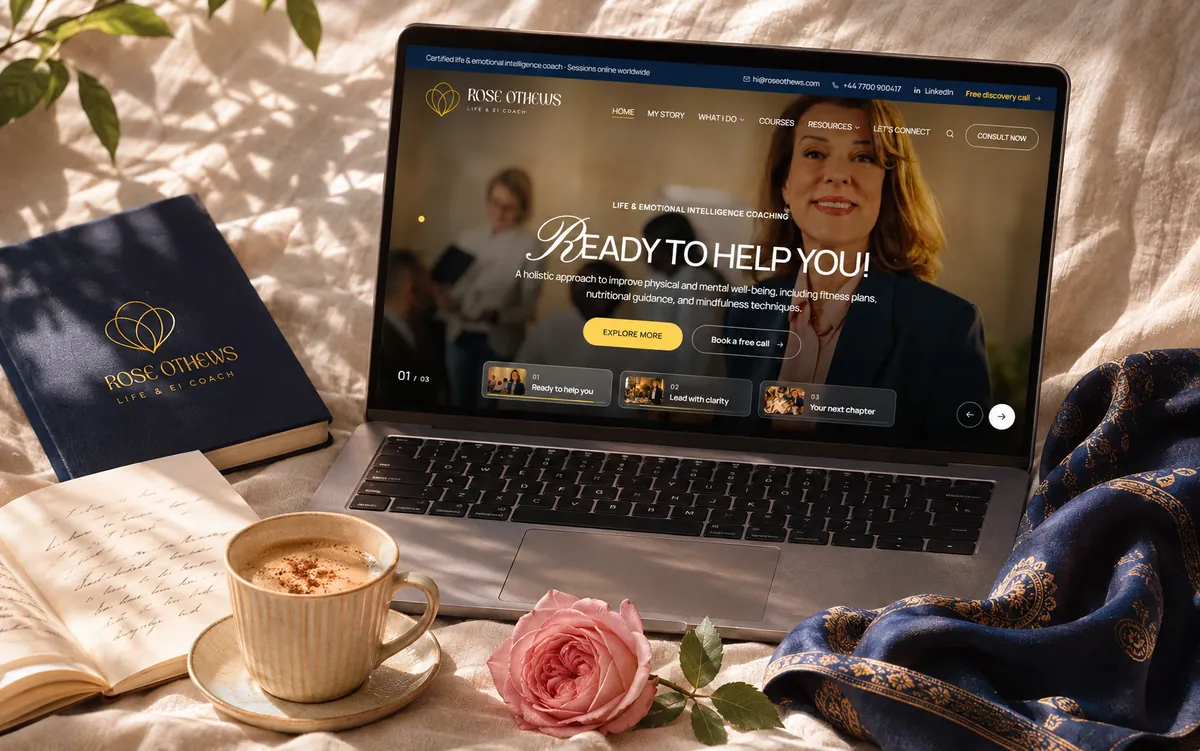
On Rose Othews, a life and emotional intelligence coach, the goal was that visitors find the right programme without needing a discovery call. A “What are you going through?” quiz recommends a programme, the top bar keeps email, phone and booking one tap away, and courses can be filtered. A Knowledge Centre and ten location pages work quietly for search.
On HeyHumans, the coach's four areas, confidence, career, relationships and resilience, lead to a booking pop-up or a “take the first small step” form. On Noah Avery, 1:1 coaching, group programmes and courses sit side by side so visitors can see which fits. Different coaches, same rule: the visitor should never have to guess which offer is for them.
Brands named here are my own self-initiated concepts unless marked Client work. Paid client work is under NDA.
Generic coaching copy is everywhere. One specific method, explained well, separates a coach from the crowd.
From the work · Rose Othews
- The brief
A life coach needed visitors to find the right programme without a discovery call.
- What we did
A “What are you going through?” quiz that recommends a programme, a Knowledge Centre and ten location pages for search.
- What it does
Visitors self-select the right programme, and the location pages quietly bring search traffic.
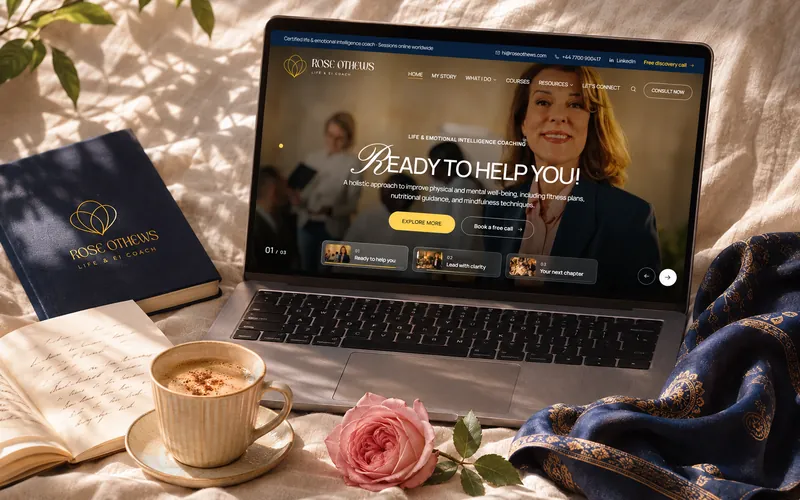 See the project · HealthRose OthewsLife and emotional intelligence coachA coaching site that listens first. A quiz maps a visitor's situation to the right programme, the top bar keeps email, phone and booking one tap away, and ten location p…
Search terms worth owning
- #life coach
- #emotional intelligence coaching
- #executive coach
- #career coaching
- #online life coach India
- #coaching website design
Questions people ask
What should a coaching website include?
Your story, a named method, offers compared side by side with prices, client stories, a free resource and booking with payment. A short quiz that recommends an offer helps a lot.
Should coaches show prices on their website?
Show at least starting prices. Visitors who can see the range self-select, and the calls you do take are with people ready to buy.
Quiz or discovery call: which works better for coaches?
Use both. A quiz handles people who know what they need; a call stays available for those who want to talk first. Rose Othews uses a quiz to recommend a programme.
Do life coaches need certification to show on their site?
Coaching isn't regulated in India, so certification isn't required, but recognised credentials such as ICF are a strong trust signal. Show them with your experience and client stories.
How do coaches rank on Google?
Publish useful articles on the problems you solve, build location pages if you coach in person, and add Person and ProfessionalService structured data. Rose Othews uses ten location pages and a Knowledge Centre.
How fast should a coaching website be?
Aim for 90 or more on Google PageSpeed for mobile. Keep founder videos off the first screen or load them on click.
The offer ladder
Most coaches sell one expensive thing. A ladder gives every visitor a next step at their level.
Free resource or newsletter
Low-cost workshop or course
Group programme
1:1 coaching
Technical SEO for coaches
Coaches compete with directories and platforms. A few technical steps make the personal site the one that ranks.
- Person and ProfessionalService schema
- Course schema for courses
- Location pages with unique, local content
- A knowledge centre linked from service pages
- Site search for returning readers
Updated 7 Nov 2026 · Aliasgar Barodawala