Retail & brands
D2C & e-commerce
D2C brands live on conversion rate and repeat purchase.
The short answer
A D2C brand's website lives on conversion rate and repeat purchase. It needs fast collection and product pages, honest cart incentives, a delivery check before checkout, policies that are easy to find and a checkout with as few steps as possible. Indian e-commerce rules also require specific seller, product and grievance details on the site.
Must-haves, and why
Fast collection and product pages speed is a conversion lever, not a technical detail.
Product details required for e-commerce: MRP, net quantity, country of origin, manufacturer details required under the Legal Metrology rules.
Honest cart incentives, such as a free-shipping or discount threshold shown as a progress bar.
A pincode check before checkout, with COD availability COD and delivery time decide many Indian orders.
A grievance officer's name and contact required under the Consumer Protection (E-Commerce) Rules, 2020.
Reviews from real buyers social proof matters most for new brands.
Shipping, returns and refund policies easy to find shoppers check them before a first order.
A checkout in three steps or fewer, with UPI every extra step costs orders.
A journal for search content brings visitors product pages can't.
No dark patterns: no hidden charges, no pre-ticked add-ons, no false urgency they are banned under India's 2023 guidelines and they cost trust.
Authority & trust signals
Pages to build
Common mistakes
- A slow theme with a dozen apps loading on every page.
- Charges added at the last step of checkout.
- Exit pop-ups on every page view.
- Policies that are hard to find.
- Required product declarations missing.
Our take · Aliasgar Barodawala
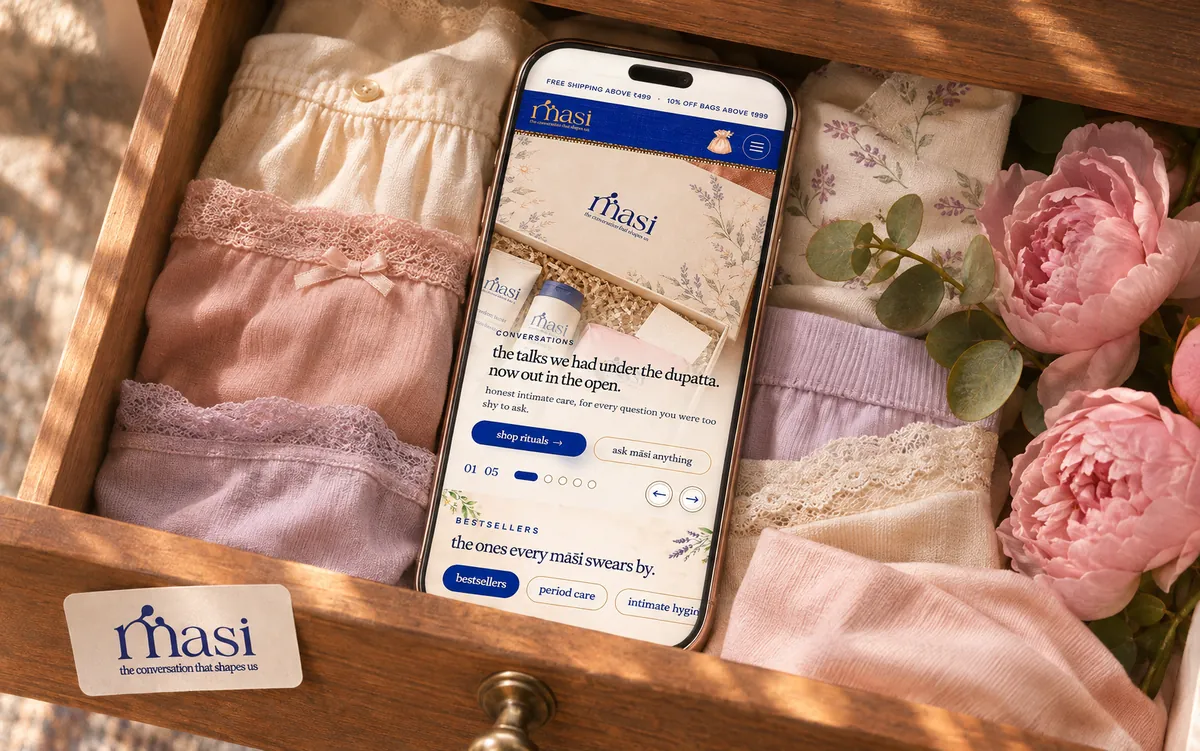
māsi is an intimate-care brand, and its storefront had to feel familiar to shoppers. I built 59 pages to look and behave as if made on Shopify: 16 products, 11 collections, a journal, policies, a cart and a three-step checkout, keeping every existing image file name. An exit-intent offer, a cart that unlocks 10% off above ₹999 and a pincode check support each purchase.
I've also built WooCommerce stores where a platform was the better choice: TrueNorth, where shoppers follow a three-step routine, Purify, Nourish, Defend; Chic Reverie, a perfume store with add to cart from the listing; and CrispyKiss in Dubai, with checkout in AED. Many brands outgrow templates on speed first.
Brands named here are my own self-initiated concepts unless marked Client work. Paid client work is under NDA.
Many brands outgrow templates on speed first. A custom storefront that looks familiar can still be far faster.
From the work · māsi
- The brief
An intimate-care brand needed a full storefront that felt familiar to shoppers.
- What we did
A 59-page storefront built to feel Shopify-made: 16 products, 11 collections, a journal, policies, cart and three-step checkout.
- What it does
An exit-intent offer, a ₹999 cart unlock and a pincode check support every purchase.
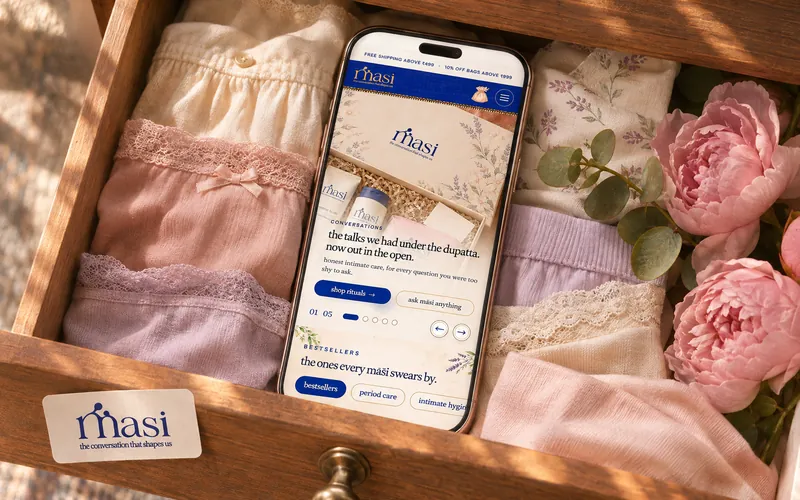 See the project · Intimate Care · D2C ShopifymāsiShopify store for an Indian intimate-care brand: period care, hygiene and comfort, sold by life chapter, with a quiz that recommends the right productA custom Shopify store for māsi, an Indian intimate-care brand. A five-story hero, shop-by-chapter navigation, fifteen products and five ritual bundles, seven product te…
Search terms worth owning
- #D2C brand
- #online store India
- #buy online
- #free shipping
- #COD available
- #D2C website development
Questions people ask
What should a D2C brand website include?
Fast product and collection pages, honest cart incentives, a delivery check, reviews, clear policies, a short checkout and a journal for search.
What must an Indian e-commerce website show by law?
Under the Consumer Protection (E-Commerce) Rules, 2020 and the Legal Metrology rules, details such as seller information, MRP, net quantity, country of origin, return policy and a grievance officer's contact must be shown. Check the current rules for your category.
Shopify, WooCommerce or custom: which is best for D2C?
Shopify is quick to start, WooCommerce gives control on WordPress, and a custom storefront wins on speed and design freedom. māsi is custom, TrueNorth and CrispyKiss run on WooCommerce.
Are cart incentives and exit pop-ups worth it?
Yes, when honest and occasional: one exit offer per visitor and a clear threshold bar. Repeated pop-ups and hidden conditions hurt trust and may count as dark patterns.
How do D2C brands get organic traffic?
A journal that answers real questions, collection pages with unique text, and Product structured data with reviews and return policy.
How fast should an e-commerce website be?
Aim for 90 or more on Google PageSpeed for mobile on product and collection pages, since that is where buying decisions happen.
Required on an Indian e-commerce site
These are commonly required under consumer protection and legal metrology rules. Confirm for your product category.
- Seller name and address
- MRP and net quantity
- Country of origin
- Manufacturer or importer details
- Return, refund and exchange policy
- Grievance officer name and contact
Technical SEO for D2C
Most D2C traffic is paid. These steps grow the free half.
- Product schema with offers, reviews and hasMerchantReturnPolicy
- Unique text on every collection page
- A journal linked to products
- Canonical tags on filtered and sorted URLs
- Third-party apps audited for their effect on LCP and INP
Updated 7 Nov 2026 · Aliasgar Barodawala